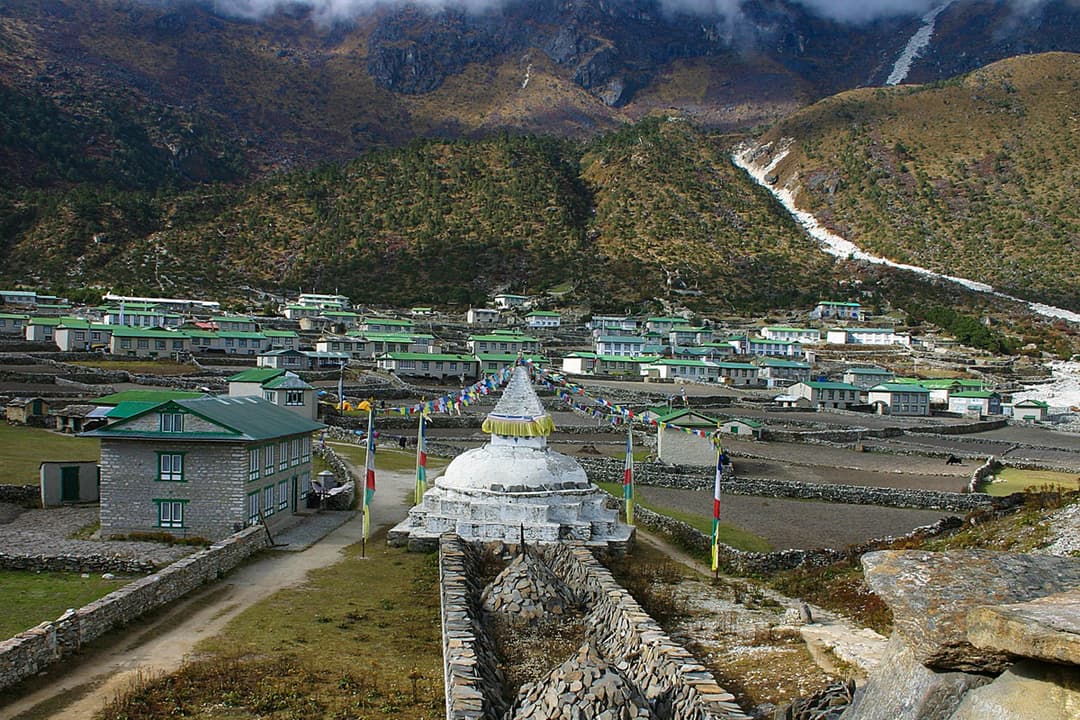
Khumjung and Khunde are among the most culturally interesting settlements in the Khumbu region of Nepal. Located a few hours' walk from Namche Bazaar, the neighboring villages provide travelers with an opportunity to step away from the busy trekking routes and experience a quieter side of the Everest region. Nepal Tourism Board identifies both villages as traditional Sherpa settlements situated above Namche, while Khumjung is described as the largest village in the Khumbu and lies beneath the sacred peak of Khumbila.
The villages are characterized by traditional stone houses, cultivated land, mountain trails and a strong connection with Sherpa Buddhist culture. Visitors walking through the settlements can observe prayer flags, mani stones, Buddhist structures and traditional Himalayan architecture while enjoying views of the surrounding mountains. The area also provides an excellent opportunity to learn about how communities have adapted their lives to the challenging high-altitude environment.
Khumjung is also associated with the Khumjung School, established in 1960, while Khunde is home to the Khunde Hospital, both of which are noted by the Nepal Tourism Board as important community institutions.
The surrounding landscape forms part of Sagarmatha National Park, a UNESCO World Heritage Site recognized for its dramatic mountains, glaciers, deep valleys and the distinctive Sherpa culture that has developed within the region. UNESCO notes that Sherpa traditions and community practices are closely connected with conservation and the protection of the Himalayan environment.
For visitors, a walk through Khumjung and Khunde can be combined with a longer acclimatization excursion from Namche Bazaar. The journey allows travelers to experience local settlements, Himalayan scenery and cultural heritage without requiring a long expedition. It is particularly suitable for travelers interested in photography, cultural tourism, village walks and learning about Sherpa life.
Khumjung and Khunde demonstrate that the Khumbu experience extends far beyond Mount Everest itself. Their landscapes, traditions, community institutions and peaceful atmosphere make them valuable destinations for travelers seeking a deeper connection with the culture and people of the Everest region.